Certifications & compliance
A certificate number is not compliance. Compliance is a current, product-specific test report from an accredited lab, matched to your destination market and sales channel. This page explains which documents apply to US cookware imports, and how to verify each one independently — including on us.
What each certification actually confirms.
FDA and LFGB are independent systems operating in separate regulatory markets. They use different test protocols and different pass criteria — a product with LFGB results still requires separate FDA-specific testing for the US.
| Certification / test | Market | What it confirms | Who asks for it |
|---|---|---|---|
| FDA food contact | United States | Food-contact material safety under 21 CFR | US importers and retailers — the baseline requirement |
| California Proposition 65 | US — California | Heavy-metal and chemical disclosure | Any US buyer distributing into California |
| NSF / NSF ANSI | United States | Commercial food equipment and materials approval | Foodservice, restaurant supply and hotel channels |
| LFGB | EU / Germany | Food-contact migration limits — generally stricter than FDA | EU buyers; a quality signal for US premium programmes |
| REACH | EU | Chemical substance restrictions | EU importers, especially coated cookware |
| ISO 9001 | Global | Factory quality management system | Retail buyers evaluating supplier reliability |
| BSCI / Sedex / SMETA / WCA | Global | Social and labour compliance audit | Supermarket chains and mass-market retail |
| SGS / Intertek reports | Global | Third-party test evidence | Any buyer performing sourcing due diligence |
| Mill certificate (MTR) | Global | Stainless steel grade verification | Buyers specifying 304 / 18-8 in writing |
How to verify any supplier — including us.
These checks take one afternoon and they are the difference between a supplier relationship and a liability.
Verify the certificate number in the issuer's database
Never accept a certificate image alone. Look the number up in the certification body's own public database. If the listing does not exist, the document is decorative.
Ask for a current report, not a general certificate
Test reports typically expire within one to two years, and material sources change between batches. A product-specific report dated within the last year is worth more than a decade-old factory certificate.
Request the mill certificate from the steel mill
Genuine 304 has a predictable chromium and nickel ratio. Mill certificates trace the steel coil back to the steel producer — a factory-generated certificate proves nothing. Cross-check with a $50–$150 XRF test.
Distinguish a factory from a trading company
Chinese business licences state the registered activity type — a manufacturer and a trading company hold different categories. Ask for the licence, then ask a specific technical production question and see who answers it.
Ask for a cross-section, or run a live video call
A factory making genuine full-clad tri-ply has no reason to refuse a wall cross-section photograph. A live production-floor call — not a showroom tour — tells you more than any catalogue.
Commission a pre-shipment inspection
For orders above roughly $5,000, an SGS, Intertek, Bureau Veritas or QIMA inspection costs a few hundred dollars and verifies quantity, quality and packaging before the container is sealed.
Start with the documents. Then talk to us.
Four documents are free to download right now — general guides for procurement teams, no registration wall. Product-specific reports and certificates are shared for the exact SKU and destination market you name, because a report for someone else's product is not evidence for yours.
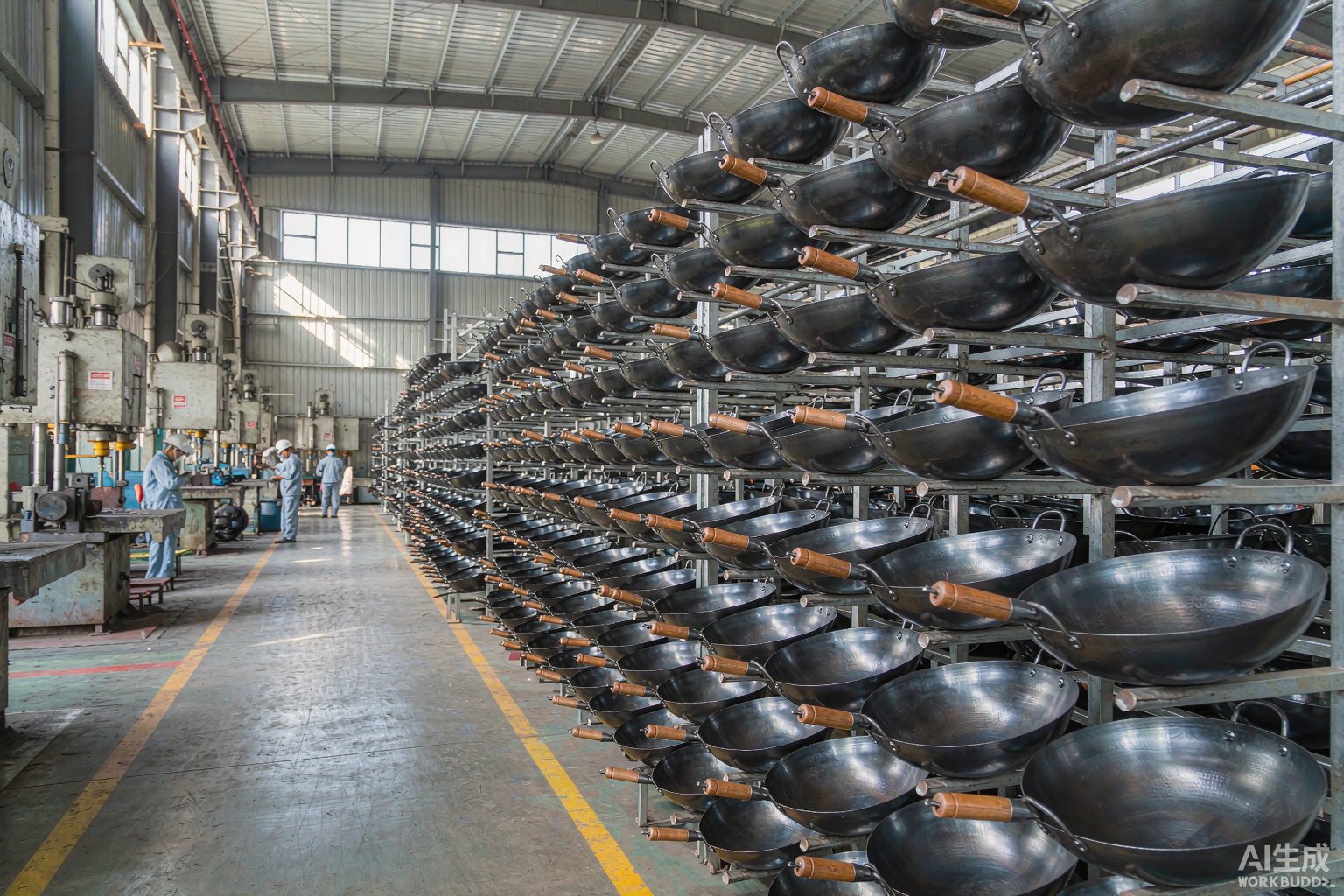 Factory walkthrough · publishing shortly
Watch the line before you wire a deposit.
A live production-floor walkthrough tells you more than any catalogue: how coils are cut, how bodies are formed, how coatings are applied and cured, and how finished goods are packed for ocean freight.
The full video is being finalised for publication. Until it is live, ask and we will send the current walkthrough recording — or schedule a live call with the floor, not a showroom.
Ask for the documents your committee needs.
Tell us the product line and the destination market. We will confirm which certifications apply, share current reports for your review, and state clearly where coverage does not yet exist.
Tell us the market. We will tell you the requirement.
Destination market, sales channel and product material determine the exact document set you need. It takes one email to confirm.